

Sri Lanka offers several transport choices for getting around, each with different price points and safety aspects. A budget-friendly bus ride costs 500 LKR ($1.50). Ride-hailing apps provide short tuk-tuk trips for around 100-200 LKR ($0.50-$1). You can hire a private driver for $80-$120 USD per day. The PickMe app in Sri Lanka has become the most popular ride-hailing platform in the country, like how Uber operates elsewhere.
These transport tips help you make informed decisions, from Sri Lanka bus routes to the Train vs Car debate. This piece breaks down the key differences between ride-hailing services and traditional tuk-tuks. We cover safety features and situation-based recommendations that will help you choose the right option for your trip.
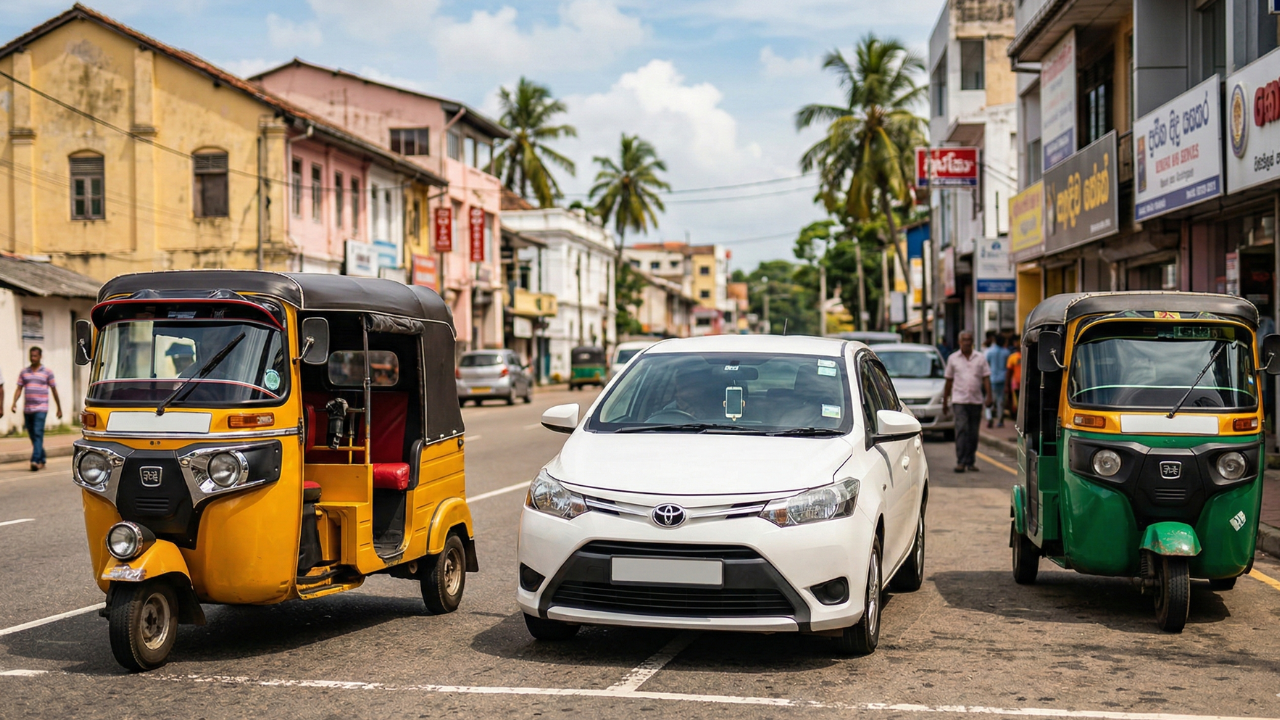
Detailed Comparison: Uber, PickMe and Tuk-Tuks
PickMe dominates as the #1 transportation hailing platform for the Western Province and holds approximately 70% of the market share. The app provides access to multiple vehicle types, including three-wheelers, Nano, Mini, Sedan, and Van options. Uber operates with more limited coverage and functions mainly in Colombo, with some availability in Kandy and Galle. Then, travelers face substantially different success rates depending on location.
Geographic coverage reveals stark differences. PickMe drivers appear available in major cities like Colombo and Kandy, but become scarce in places like Ella and Dambulla. Success rates vary from all rides hailed in Colombo and Negombo to only 2 out of 10 rides in Nuwara Eliya and Ella. Uber’s service area ends at Negombo, Kadawatha, Kaduwela, and Panadura.
Pricing structures differ between platforms. PickMe functions more like a meter taxi with flexibility in route changing. Your final fare might differ from the initial estimate. Uber maintains fixed pricing and shows what you’ll pay when the ride is confirmed. Traditional metered tuk-tuks start at Rs. 100 with Rs. 100 per km rates, while PickMe and Uber rides start at Rs. 180. But app-based services cost 10-17% less than negotiating with roadside tuk-tuks.
Safety Features and Best Practices for Each Option
Both Uber and the PickMe app in Sri Lanka offer built-in safety tools that traditional tuk-tuks lack. Uber provides Share My Trip functionality, where you can share your immediate location with up to 5 contacts and an emergency assistance button that connects to local authorities. Drivers’ profiles display names, photos and ratings. The platform introduced RideCheck technology that detects trip irregularities like long stops or possible crashes and sends notifications to check if everything is acceptable. Uber rolled out PIN verification in Sri Lanka and requires drivers to enter a 4-digit code before starting trips. The company also set up a dedicated Safety Helpline for non-emergency issues during rides.
PickMe has an emergency button that connects to their safety team and 24/7 safety hotline access. Both platforms display driver information before pickup and allow you to verify vehicle details against the app. To name just one example, you can check the license plate and driver photo to prevent boarding the wrong vehicles.
Traditional tuk-tuks require different precautions when getting around Sri Lanka. Always agree on fares before starting or insist on meter usage. Watch the driver complete card payment trips since some continue rides after drop-off to inflate charges. Drivers request ride cancellations to avoid platform commissions, especially when you have card payments. Never accept these requests during late-night travel. Keep cash ready since drivers often reject card transactions.
Making the Right Choice: Situation-Based Recommendations
Your choice depends on where you’re traveling and what matters most. Both Uber and PickMe operate official pickup points at Bandaranaike International Airport. They’re reliable options to start your trip. Rideshare apps help you avoid scammers that target foreigners, especially those offering “special” tours or gem shop visits.
Ride-hailing apps work best when you explore urban areas. Uber and PickMe function in Colombo and Kandy, with limited availability elsewhere. You won’t find these services in rural areas. You’ll need to negotiate with tuk-tuk drivers or arrange alternative transport through local taxi services.
Public transport benefits travelers on a budget. Buses remain the cheapest option at approximately 500 LKR for long routes. The embassy warns against using them due to harassment and theft risks. Trains offer scenic trips between major cities for just a few dollars. They’re ideal when you have time to spare.
Hiring a private driver costs around USD 40-50 per day. It becomes worthwhile in specific scenarios. Families with children or elderly members find door-to-door service valuable. Complex itineraries with multiple stops, remote locations, or tight schedules justify the expense. Time-sensitive business trips where you need to improve productivity also make it worth the cost.
Comparison Table: Transportation Options in Sri Lanka
| Feature | Uber | PickMe | Traditional Tuk-Tuks |
|---|---|---|---|
| Market Share | Limited presence | ~70% market share, #1 platform in Western Province | N/A |
| Geographic Coverage | Colombo is the main area, with some availability in Kandy and Galle; service ends at Negombo, Kadawatha, Kaduwela, and Panadura | Available in major cities (Colombo, Kandy, Galle); scarce in Ella and Dambulla; success rates vary from 100% in Colombo/Negombo to 20% in Nuwara Eliya/Ella | Accessible to more people throughout Sri Lanka and includes rural areas |
| Vehicle Types | Not specified | Three-wheelers, Nano, Mini, Sedan, Van | Three-wheelers only |
| Pricing Structure | Fixed pricing - exact fare shown at booking | Meter-based with flexibility; final fare may differ from the original estimate | Metered or negotiated; Rs.100 starting + Rs.100 per km |
| Starting Fare | Rs.180 | Rs.180 | Rs.100 |
| Cost Comparison | 10-17% less than roadside tuk-tuks | 10-17% less than roadside tuk-tuks | Higher when negotiated from roadside |
| Safety Features | Share My Trip (up to 5 contacts), emergency assistance button, driver profiles with ratings, RideCheck technology, PIN verification, dedicated Safety Helpline | Emergency button, 24/7 safety hotline, driver information display | No built-in safety features; manual verification required |
| Payment Options | Card and cash (drivers sometimes reject card) | Card and cash (drivers sometimes reject card) | Cash is the main option; card payment available with some drivers |
| Airport Service | Official pickup point at Bandaranaike International Airport | Official pickup point at Bandaranaike International Airport | Available but higher scam risk |
| Best For | Urban travel in Colombo and Kandy, avoiding scammers, travelers who prefer fixed pricing | Urban travel in Western Province, travelers needing vehicle types of all kinds, most reliable app-based option | Rural areas, locations without app coverage, travelers with cash only |
| Key Limitations | Coverage outside major cities is very limited | Variable success rates outside Colombo, drivers may request cancelations | No digital safety features, fare negotiation required, potential for overcharging |
Key Takeaways
Here are the essential insights for choosing safe and cost-effective transportation in Sri Lanka:
- PickMe dominates with 70% market share and offers the widest coverage across Western Province, making it your most reliable ride-hailing option.
- Download both apps before arrival since Uber has limited coverage outside Colombo. At the same time, PickMe works better in major cities but struggles in rural areas.
- App-based rides cost 10-17% less than roadside tuk-tuks and include safety features like emergency buttons and driver verification that traditional tuk-tuks lack.
- Keep cash ready as backup since drivers often reject card payments, especially for late-night rides or to avoid platform commissions.
- Traditional tuk-tuks remain essential for rural travel where ride-hailing apps aren’t available, but always agree on fares upfront or insist on meter usage.
Both Uber and PickMe provide crucial safety features like real-time trip sharing and emergency assistance that make them significantly safer than negotiating with street tuk-tuks, especially for first-time visitors unfamiliar with local pricing and common scams.
Conclusion
Your transport choice in Sri Lanka depends on where you’re headed and what you value most. PickMe offers the widest coverage and vehicle variety. This makes it the best option for travelers. Uber works well for Colombo-area trips with fixed pricing. Traditional tuk-tuks remain your only choice in rural areas. Download both apps before arrival and keep cash handy. Always verify driver details against the app for a safer trip.
FAQs
Q1. Which ride-hailing app is more reliable in Sri Lanka – Uber or PickMe? PickMe is generally more reliable throughout Sri Lanka, holding approximately 70% of the market share and offering wider coverage across the Western Province and major cities. While Uber operates primarily in Colombo with limited availability in Kandy and Galle, PickMe provides better service availability in more locations, making it the preferred choice for most travelers.
Q2. Are app-based rides cheaper than hiring tuk-tuks directly from the street? Yes, app-based services like PickMe and Uber are typically 10-17% cheaper than negotiating with roadside tuk-tuk drivers. App rides start at Rs. 180, while metered tuk-tuks start at Rs. 100 but charge Rs. 100 per kilometer. The transparent pricing and digital tracking of apps help you avoid overcharging, which is common when negotiating directly with street drivers.
Q3. What safety features do ride-hailing apps offer compared to traditional tuk-tuks? Ride-hailing apps provide several built-in safety features that traditional tuk-tuks lack, including driver verification with photos and ratings, real-time trip sharing with contacts, emergency assistance buttons connecting to local authorities, and 24/7 safety hotlines. These digital safety tools allow you to verify your driver before boarding and share your location with others during the journey.
Q4. Should I pay with cash or a card when using Uber or PickMe in Sri Lanka? Cash is strongly recommended when using ride-hailing apps in Sri Lanka. Drivers often prefer cash payments because card transactions can take days or weeks to process, and they may face additional fees. Many drivers will reject or cancel rides that require card payment, especially during late-night travel, so keeping cash readily available ensures a smoother experience.
Q5. When should I hire a private driver instead of using ride-hailing apps? Hiring a private driver (costing around $40-50 per day) makes sense for complex itineraries with multiple stops, travel to remote locations where apps don’t operate, families with children or elderly members needing door-to-door service, or time-sensitive trips requiring maximum efficiency. For simple point-to-point travel in urban areas, ride-hailing apps remain the most cost-effective option.